
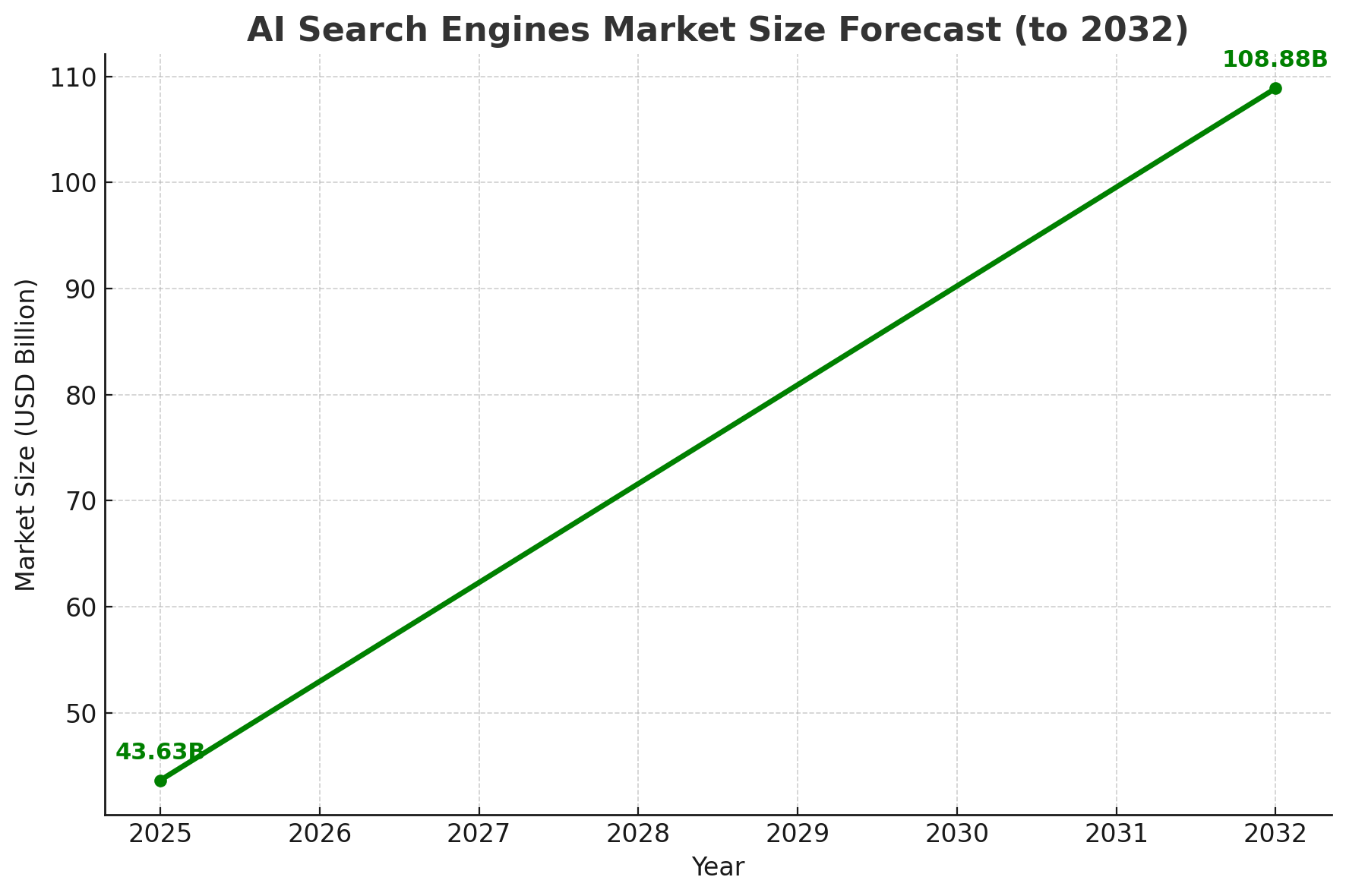
Search has always been about speed and relevance. Type a word, get results. But lately, the way we search has shifted. People don’t want to guess the right keywords anymore. They want answers that feel conversational, almost like talking to a friend. That’s where AI search engines step in.
Instead of relying only on ranking formulas and static indexes, AI-driven search uses models that can understand language, context, and intent. The result? Smarter answers, fewer clicks, and a search experience that actually feels human.
What Are AI Search Engines?
At the simplest level, an AI search engine is a system that uses artificial intelligence—usually machine learning or large language models—to improve how results are found and presented.
Unlike older search engines that match keywords, AI systems can:
- Understand natural language questions (like “What’s the best budget smartphone this year?”).
- Interpret the context of a query and adapt results.
- Combine multiple data sources into a single clear answer.
- Continuously improve through user feedback.
If you’ve used modern tools that answer questions directly instead of giving a list of links, you’ve already experienced this. Even google is now is evolving search using AI Overviews.
Why AI Search Engines Outperform Traditional Search
Think back to how many times you’ve searched for something and had to click through page after page. With AI-powered search, that problem fades.
Here’s why they’re more effective:
- Context awareness – Instead of treating each word separately, the engine understands full sentences.
- Better ranking signals – AI can analyze patterns beyond backlinks or keyword density.
- Dynamic answers – Content can be summarized on the fly, tailored to your specific question.
- Personalization – Some engines learn user behavior and adjust results automatically.
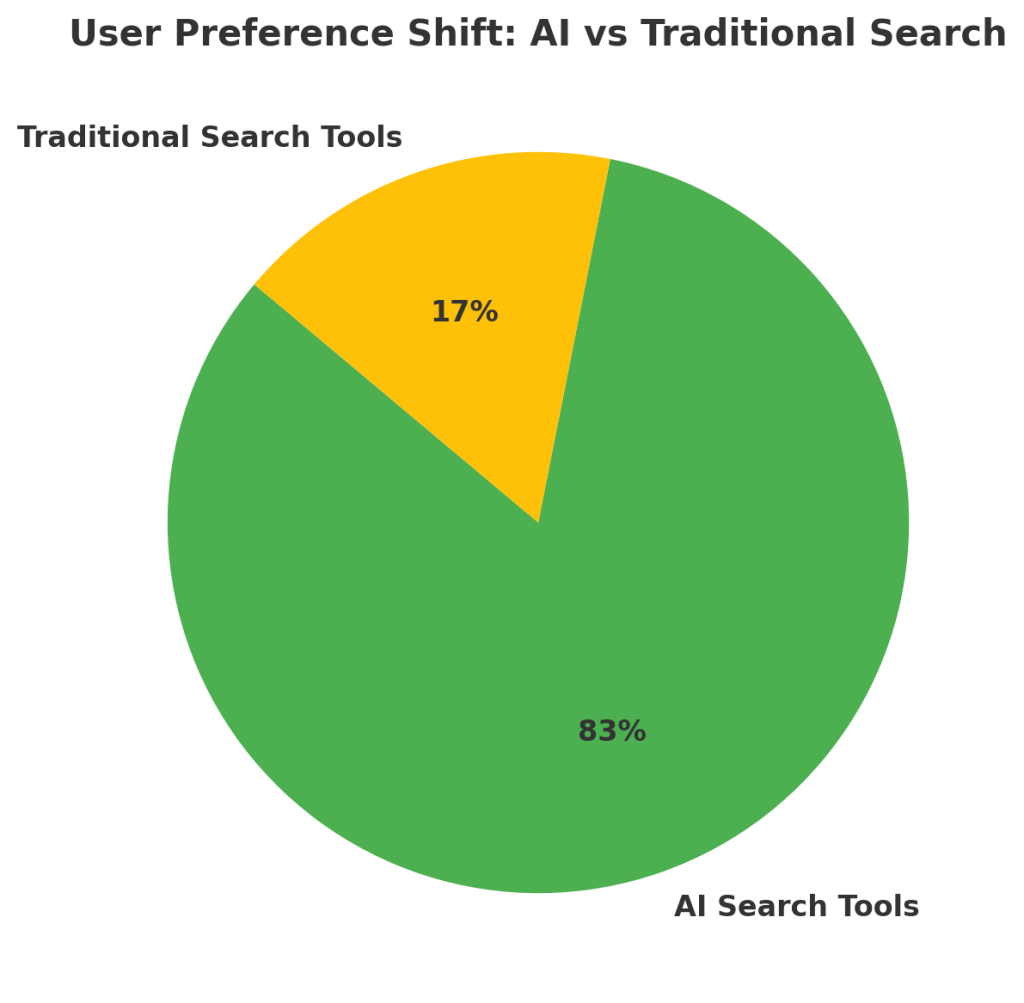
In other words, the results aren’t just faster—they’re smarter and people love them:
Practical Examples of AI Search Engines in Action
- E-commerce: Customers ask for “running shoes under $100 with good arch support” and get exactly that, instead of sorting through 20 irrelevant pages.
- Healthcare: A patient types in symptoms, and the system surfaces articles and research while flagging urgent conditions.
- Knowledge bases: Employees in big companies can query internal documents without knowing exact file names.
These real-world cases show why so many industries are adopting AI-powered search systems.
The Technology Behind It
AI search engines typically combine several layers:
- Indexing and crawling – Collecting and organizing data.
- Embedding models – Converting text into vectors so the system can measure meaning, not just words.
- Ranking algorithms – Deciding which results best fit the query.
- Summarization – Creating a natural-language answer when possible.
To make this work at scale, performance and efficiency are key. That’s why developers often integrate third-party APIs rather than building everything from scratch.
Building Search Backbones with APIs
Let’s be honest—building a reliable AI search engine isn’t easy. It takes time, infrastructure, and a lot of testing. Most developers don’t want to reinvent the wheel. They want something that’s proven to work.
That’s where services like AI Search API come into play.
It’s a dedicated AI search API designed to serve as the backbone of custom search engines. The benefits are straightforward:
- Fast: Low latency so results load quickly.
- Reliable: Stable infrastructure that can handle high traffic.
- Cost-effective: Affordable pricing that scales without burning budgets.
- Integrations out of the box: Connect it directly with existing apps and platforms.
If you’re curious about how to set it up, the documentation is here: AI Search API Docs.
Why Speed and Reliability Matter
A search engine that lags or fails under load doesn’t last. Users drop off quickly if they can’t get answers instantly. That’s why speed is not a “nice to have”—it’s the foundation.
AI Search API has been built with this reality in mind. By outsourcing the hardest parts—indexing, querying, and scaling—developers can focus on delivering value to their end users.
Think of it like building a house: you don’t make your own bricks. You buy them, then design the layout that makes the house unique.
Comparing AI Search Engines with Traditional Systems
Let’s break it down quickly:
| Feature | Traditional Search | AI Search Engines |
|---|---|---|
| Keyword Matching | Yes | Yes, plus semantic understanding |
| Context Awareness | Limited | Strong |
| Personalization | Basic (cookies) | Adaptive learning |
| Summarization | Rare | Built-in |
| Setup Complexity | Lower | Higher (unless using an API) |
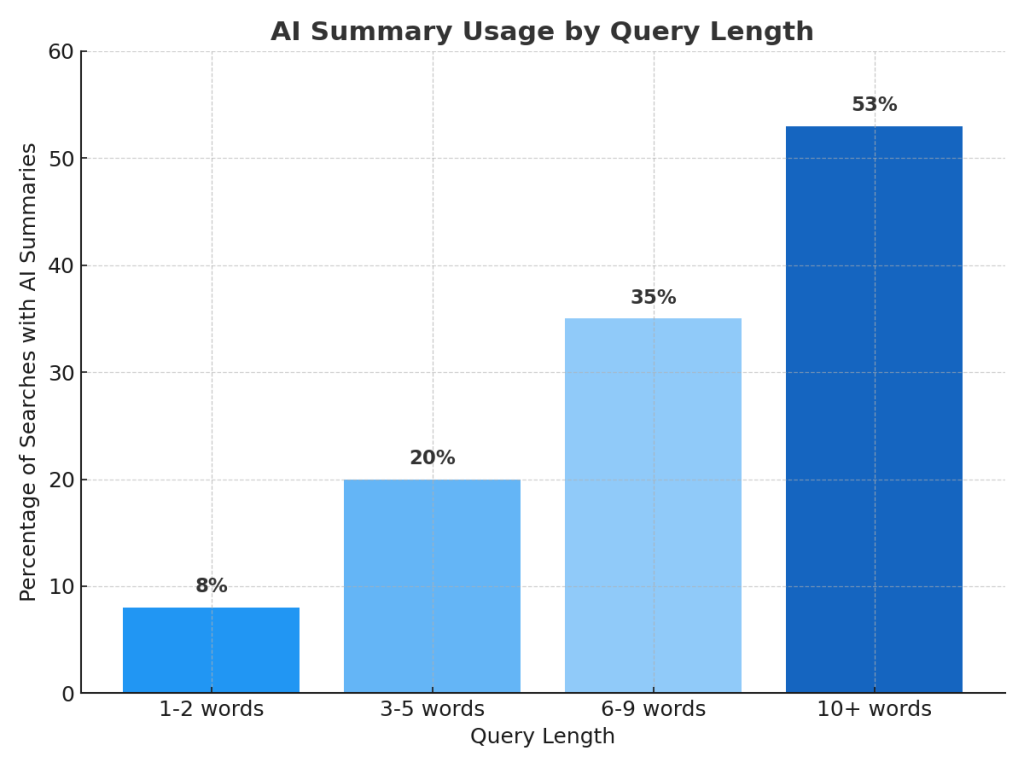
The shift isn’t about replacing everything traditional search engines do—it’s about extending capabilities. Here are some insight on how people forming their search queries:
Who Benefits From AI Search Engines?
Honestly? Almost anyone building digital products. But a few groups stand out:
- Developers – They save time by integrating a backbone like AI Search API.
- Businesses – They improve customer satisfaction by reducing friction in finding answers.
- Users – They get faster, more accurate results with less effort.
That’s a win across the board.
Challenges in AI Search Engines
It’s not all smooth sailing. Some of the common challenges include:
- Bias in training data – If the models are trained on skewed data, the results may reflect that.
- Scalability – Handling millions of queries requires serious infrastructure.
- Cost management – Running large models can be expensive without efficient APIs.
- Evaluation – Measuring “relevance” is subjective, and users expect perfection.
This is why reliable APIs matter—they abstract away many of these problems.
The Future of AI Search Engines
We’re moving toward a world where search feels more like a conversation than a lookup tool. Soon enough, users won’t type keywords; they’ll ask complete questions, even multi-part ones, and expect immediate, clear answers.
AI Search API is already aligned with this future. Its performance and integrations make it an option not just for startups, but also for bigger companies that want to move fast without building everything from scratch.